9 Best Custard Apple Seeds for 2026 (Grow Sweet Success)
You’ll find sweet success in 2026 with top picks like Red Custard Apple (Bullock’s Heart), known for its rare, heart-shaped fruit and 3.5-star rating. Go for 10 or 20+ non-GMO Sugar Apple seeds from trusted brands like QAUZUY GARDEN or Alexi.
Consider Paw Paw seeds if you’re in a cooler zone—they thrive in zones 5–9 and boast a 4.3-star rating. Pick fresh, firm seeds, match them to your climate, and there’s more to discover as you plan your growing journey.
Quick Overview
- Choose non-GMO custard apple seeds from reputable brands like QAUZUY GARDEN or TomorrowSeeds for reliable germination and quality.
- Opt for varieties such as Red Custard Apple or Sugar Apple (Annona squamosa) known for sweet, creamy fruit and tropical appeal.
- Soak seeds 24–72 hours and plant ½ to ¾ inch deep in warm, moist, well-draining soil for best germination results.
- Maintain temperatures of 75–85°F and high humidity; use a heat mat and plastic cover to speed up sprouting.
- Grow in containers (10–15 gallons) for mobility and success in zones 9–11, or use cold-hardy Paw Paw as an alternative in zones 5–9.
| Red Custard Apple Tree (10 Seeds) AKA Bullock’s Heart,jamaican Apple ! Rare |  | Rare & Exotic Pick | Quantity: 10 seeds | Scientific Name: Annona reticulata | Growing Zone: Not specified | VIEW LATEST PRICE | Read Our Analysis |
| 10 Pcs Sugar Apple Seeds for Planting |  | Best Value Bulk | Quantity: 10 seeds | Scientific Name: Annona squamosa | Growing Zone: Warm, tropical | VIEW LATEST PRICE | Read Our Analysis |
| 10 Sugar Apple Seeds (Annona squamosa) Non-GMO |  | High Germination Rate | Quantity: 10 seeds | Scientific Name: Annona squamosa | Growing Zone: USDA 4–11 | VIEW LATEST PRICE | Read Our Analysis |
| Sugar Apple Seeds – 20+ Annona Squamosa |  | Largest Seed Count | Quantity: 20+ seeds | Scientific Name: Annona squamosa | Growing Zone: USDA 3 | VIEW LATEST PRICE | Read Our Analysis |
| Paw Paw Tree Seeds for 2025 Planting |  | Editor’s Choice | Quantity: 5+ seeds | Scientific Name: Asimina triloba | Growing Zone: USDA 5–9 | VIEW LATEST PRICE | Read Our Analysis |
| Red Custard Apple Tree Seedling (8–12 in) |  | Premium Live Seedling | Quantity: 1 seedling | Scientific Name: Annona reticulata L | Growing Zone: USDA 9–11 | VIEW LATEST PRICE | Read Our Analysis |
| 25 Sugar Apple Seeds (Annona squamosa) |  | Best for Containers | Quantity: 25 seeds | Scientific Name: Annona squamosa | Growing Zone: Above 70°F | VIEW LATEST PRICE | Read Our Analysis |
| Red Custard Apple Tree (10 Seeds) AKA Bullock’s Heart,jamaican Apple ! Rare |  | Budget-Friendly Option | Quantity: 10 seeds | Scientific Name: Not specified | Growing Zone: Not specified | VIEW LATEST PRICE | Read Our Analysis |
| Jamaican Custard Apple Tree (10 Seeds) AKA bullock’s Heart,Jamaican Apple ! |  | Caribbean Heirloom Variety | Quantity: 10 seeds | Scientific Name: Annona reticulata | Growing Zone: Warm, frost-free | VIEW LATEST PRICE | Read Our Analysis |
More Details on Our Top Picks
Red Custard Apple Tree (10 Seeds) AKA Bullock’s Heart,jamaican Apple ! Rare
If you’re hunting for rare, exotic fruit seeds that aren’t your average grocery-store find, the Red Custard Apple Tree (10 Seeds) — also known as Bullock’s Heart or Jamaican Apple — is a standout choice. You’ll grab a rare tropical variety with rich flavor and garden appeal.
It ranks #441 in Fruit Plants & Seeds and #106,321 in Patio, Lawn & Garden, with 15 reviews averaging 3.5 stars. The ASIN is B01386XER8.
You can report lower prices online or in stores to help keep pricing competitive—just sign in and share the details. Warranty info’s available with a click.- Quantity:10 seeds
- Scientific Name:Annona reticulata
- Growing Zone:Not specified
- Sun Requirement:Not specified
- Germination Time:Not specified
- GMO Status:Not specified
- Additional Feature:Rare tropical fruit variety
- Additional Feature:Bright red fleshed fruit
- Additional Feature:Known as Jamaican Apple
10 Pcs Sugar Apple Seeds for Planting
You’ll get 10 fresh, non-GMO sugar apple seeds with a high germination rate—perfect for beginners and gardeners who want reliable, low-maintenance tropical plants. Just soak them for 24 hours, then plant ½ inch deep in well-draining soil.
Keep in full sun at 75–85°F and water regularly. You’ll see sprouts in 3–6 weeks.
These Annona squamosa seeds grow into sweet, creamy fruit-bearing trees, reaching about 6 feet. They thrive in warm climates and attract pollinators.
Use pots first, then transplant outdoors. PIPA PAPA’s organic, heirloom seeds are easy to grow and ideal for home gardens or orchards.
You’ll enjoy success fast.- Quantity:10 seeds
- Scientific Name:Annona squamosa
- Growing Zone:Warm, tropical
- Sun Requirement:Full sun
- Germination Time:3–6 weeks
- GMO Status:Non-GMO
- Additional Feature:High germination rate guaranteed
- Additional Feature:Attracts pollinators naturally
- Additional Feature:Ideal for container growing
10 Sugar Apple Seeds (Annona squamosa) Non-GMO
Gardeners keen to grow tropical flavor at home find the Sugar Apple Seeds (Annona squamosa) Non-GMO the perfect fit—each pack of 10 seeds from QAUZUY GARDEN delivers organic, non-GMO potential for creamy, custard-sweet fruit right in your backyard. You’ll plant them 3/4-inch deep in well-drained soil, keeping them moist and warm above 70°F.
They’ll sprout best in spring, thriving in full sun and USDA zones 4–11. You’ll enjoy fragrant blooms in summer, followed by nutritious fruit rich in potassium, iron, and magnesium.
These non-GMO seeds may even help lower blood sugar and support heart health. With regular watering and a little patience, you’ll grow your own exotic harvest.- Quantity:10 seeds
- Scientific Name:Annona squamosa
- Growing Zone:USDA 4–11
- Sun Requirement:Full sun
- Germination Time:Not specified
- GMO Status:Non-GMO
- Additional Feature:Rich in essential minerals
- Additional Feature:Fragrant tropical fruit flavor
- Additional Feature:Supports blood sugar health
Sugar Apple Seeds – 20+ Annona Squamosa
Start your 2026 growing season with Sugar Apple Seeds – 20+ Annona squamosa – ideal for backyard growers keen to cultivate sweet, tropical fruit in USDA zone 3 and beyond. You’ll get 20+ seeds per pack from brand Alexi, lightweight and easy to store.
Plant them in full sun with moderate watering, and expect spring blooms. These non-GMO seeds fit various names—Sweetsop, Thai Sugar Apple—so you’re covered.
The compact package (2.32 x 1.54 x 0.39 in) ships fast, weighs just over half an ounce, and carries UPC 300711202480. Though rated 2.8 stars from 51 reviews, they’re a budget-friendly shot at homegrown custard fruit success.- Quantity:20+ seeds
- Scientific Name:Annona squamosa
- Growing Zone:USDA 3
- Sun Requirement:Full sun
- Germination Time:Not specified
- GMO Status:Not specified
- Additional Feature:Thai Sugar Apple variety
- Additional Feature:Extra seeds (20+) included
- Additional Feature:Cold hardy to zone 3
Paw Paw Tree Seeds for 2025 Planting
If you’re looking for a cold-hardy, low-maintenance fruit tree that thrives in zones 5–9 and delivers tropical-flavored fruit right in your backyard, TomorrowSeeds’ Paw Paw Tree Seeds (Asimina triloba) are an ideal choice. You’ll get 5+ seeds packed for 2025, producing trees up to 30 feet tall with creamy, banana-mango flavored fruit.
They’re perennial, adapt well to soil types, and attract pollinators. Expect fruit in 5–10 years, with germination in 2–4 weeks.
These untreated, non-GMO seeds store well in cool, dry places. Rated 4.3 stars, they’re a top-10 seller in fruit seeds—perfect for fresh eating, smoothies, or baking.
You’ll love their lush look and rich history.- Quantity:5+ seeds
- Scientific Name:Asimina triloba
- Growing Zone:USDA 5–9
- Sun Requirement:Full sun, partial shade
- Germination Time:14–28 days
- GMO Status:No
- Additional Feature:Largest native US fruit
- Additional Feature:Historical favorite of Jefferson
- Additional Feature:Tropical banana-mango flavor
Red Custard Apple Tree Seedling (8–12 in)
When you’re after a rare tropical fruit tree that delivers creamy, sweet red-fleshed custard apples with a striking heart-shaped form, the Red Custard Apple Tree seedling (8–12 in) is your best bet for 2026. You’ll get a live, naturally grown plant in a plastic bag, ready to thrive in full sun and well-draining soil.
It loves warmth—keep it in zones 9–11, above 60°F. Water it regularly, fertilize monthly, and transplant it come spring.
This fast-growing seedling develops glossy foliage and, eventually, eye-catching red-skinned fruit with pink, creamy flesh. Perfect for yards or containers, it’s ideal if you want something exotic and rewarding.
Just one piece—you’re all set to grow something unique.- Quantity:1 seedling
- Scientific Name:Annona reticulata L
- Growing Zone:USDA 9–11
- Sun Requirement:Full sun to partial shade
- Germination Time:Not specified
- GMO Status:Not specified
- Additional Feature:Live seedling ready to grow
- Additional Feature:Fast-growing heart-shaped fruits
- Additional Feature:Pink-fleshed, sweet creamy fruit
25 Sugar Apple Seeds (Annona squamosa)
You’ll want these 25 Sugar Apple Seeds (Annona squamosa) ‘Na Dai’ if you’re after a sweet, tropical fruit tree that thrives in containers or landscapes and delivers chewy, flavorful flesh with minimal pest trouble. These GMO-free seeds from PeavyTailor grow into deer-resistant trees with exotic foliage and sweet fruit.
Soak seeds for three days, consider scarification, then plant 3/4 inch deep in moist mix. Keep warm—above 70°F—and avoid overwatering.
Germination takes 30 days or longer. Great for patios or tropical gardens, they bloom spring to fall.
Check online for tips, and use the price-match form if needed.- Quantity:25 seeds
- Scientific Name:Annona squamosa
- Growing Zone:Above 70°F
- Sun Requirement:Full sun
- Germination Time:30 days or longer
- GMO Status:GMO Free
- Additional Feature:‘Na Dai’ commercial variety
- Additional Feature:Deer resistant landscape plant
- Additional Feature:Scarification boosts germination
Red Custard Apple Tree (10 Seeds) AKA Bullock’s Heart,jamaican Apple ! Rare
Grow your own rare Red Custard Apple tree with these 10 natural seeds, perfect for gardeners who love unique, tropical fruit and outdoor growing projects. You’ll enjoy planting these easy-to-use seeds outdoors in loamy soil with moderate watering.
Known as Bullock’s Heart or Jamaican Apple, this striking red fruit stands out in any garden. Though it ranks #182,074 in Patio, Lawn & Garden and #883 in Fruit Plants & Seeds, its rarity draws interest.
Customer reviews average 2.4 stars from 26 ratings. You can check the warranty link for support details and report lower prices online or in stores if needed.
Don’t miss this uncommon tropical treat.- Quantity:10 seeds
- Scientific Name:Not specified
- Growing Zone:Not specified
- Sun Requirement:Not specified
- Germination Time:Not specified
- GMO Status:Natural
- Additional Feature:Natural seed propagation
- Additional Feature:Easy to plant and grow
- Additional Feature:Grows in loamy soil
Jamaican Custard Apple Tree (10 Seeds) AKA bullock’s Heart,Jamaican Apple !
You’re in for a treat if you’re after a tropical fruit tree that’s both exotic and easy to manage—this Jamaican Custard Apple Tree (10 Seeds) is perfect for gardeners craving something unique from the Annona family. You’ll grow a small, semi-evergreen tree reaching 5–10 m with slender fragrant flowers and heart-shaped fruit up to 16 cm wide.
It thrives in warm, frost-free areas, even in 10–15 gallon containers, producing sweet, netted fruit by late summer. You can expect pink-blushed, yellow-brown skin and creamy pulp.
Just give it partial shade and moderate water. You’ll harvest your crop in fall, and yes, it’s the same Annona reticulata known as Bullock’s Heart or Jamaican Apple.- Quantity:10 seeds
- Scientific Name:Annona reticulata
- Growing Zone:Warm, frost-free
- Sun Requirement:Partial shade
- Germination Time:Not specified
- GMO Status:Not specified
- Additional Feature:Multi-name fruit identity
- Additional Feature:Grown from Jamaican origin
- Additional Feature:Flowers never fully open
Factors to Consider When Choosing Custard Apple Seeds
You’ll want to pick a custard apple variety that suits your climate and taste, so check what grows well in your region. Make sure the seeds are fresh and viable, and get ready to meet their germination needs for strong sprouting.
Also, plan for the right soil, water, and sun to keep your tree healthy long-term.
Variety Selection Tips
When selecting custard apple seeds, start by choosing the right species—Annona squamosa gives you compact trees with sweet, aromatic fruit in as little as two to three years, while Annona reticulata delivers larger, heart-shaped fruit with creamy to pinkish flesh, better suited to warmer climates. Pick varieties matched to your USDA zone—some thrive in subtropical areas, others need tropical warmth.
If your space is limited, go for dwarf types or container-friendly cultivars. Check if the variety is self-fertile or benefits from hand-pollination, since flowers are protogynous and short-lived.
Choose fresh, high-germination seeds from heirloom, non-GMO sources to guarantee reliable growth and seed-saving options. Think long-term: tree size, yield potential, and climate resilience matter.
Match your growing conditions to the plant’s needs, and you’ll set yourself up for sweeter, more successful harvests down the line.
Seed Quality Check
Though it’s easy to overlook small details, checking custard apple seed quality upfront saves time and boosts success. Start with a float test—viable seeds usually sink, while floaters are likely duds.
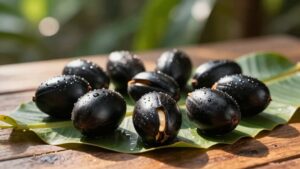
Pick seeds that are firm and have smooth, unbroken coats; skip any with cracks, soft spots, mold, or insect damage. Go for uniform size and color—dark and glossy is ideal for Annona squamosa or reticulata—with too much variation signaling poor-quality lots.
Check the dates; fresh seeds work best, so aim to plant within 1–3 years of harvest, as germination drops with age. If available, choose batches with a stated germination rate above 70%.
When in doubt, test a few seeds first by pre-soaking and sprouting a sample to judge the batch’s real viability before committing to a full planting.
Germination Requirements
If you want reliable germination, start by giving custard apple seeds the warmth they need—aim for 75–85°F (24–29°C) using a heat mat or warm spot, since cooler temperatures slow or block sprouting. Soak seeds in warm water for 12–24 hours or lightly scarify them to speed up water uptake and cut down the 2–6 week wait.
Plant them shallow, about 1/2–3/4 inch deep, in a well-draining, sterile mix. Keep the soil moist but never soggy to avoid rot.
Cover the tray or pot with a clear dome or plastic wrap to lock in humidity. Once the cotyledons emerge, give them bright, indirect light to build strong seedlings.
Don’t expect every seed to sprout—fresh, properly stored seeds germinate best. Older or poorly stored ones often fail, so pick quality wisely for better odds.
Climate Compatibility Guide
Now that your seeds have sprouted under warm, humid conditions, it’s time to think about where you’ll grow them long-term. You’ll need a frost-free climate—most custard apples thrive in USDA zones 9–11, where temps stay above 60–70°F.
If you’re in a cooler zone, don’t give up; just pick a hardier species like *Annona squamosa*, which handles mild chill better. But don’t risk it: one hard frost can kill young trees.
You’ll want consistent warmth—75–85°F is ideal for strong growth. High humidity works well for tropical types, but if your area’s drier, choose drought-tolerant varieties and make certain of good drainage.
For borderline climates, grow in containers or use microclimates. A sheltered, south-facing spot or greenhouse keeps roots warm and avoids cold damage.
Match your seed choice to your weather—you’ll boost your odds of sweet, reliable harvests.
Soil And Water Needs
While your custard apple seeds are tough in the right conditions, they won’t tolerate soggy soil—choose a well-draining loamy mix with sand or perlite to prevent rot. Keep the soil evenly moist but never waterlogged; let the top ¼–½ inch dry slightly between waterings to avoid seed rot.
Sow seeds ½–¾ inch deep and cover lightly, balancing moisture retention with enough aeration for roots to emerge. You’ll boost germination by maintaining temps between 75–85°F and moderate humidity—cooler or wetter setups slow or stop sprouting.
Once seedlings appear, shift to deeper, less frequent watering to encourage strong root systems. This builds drought resilience and prevents shallow dependency.
Don’t overwater just because growth is slow—custard apples prefer consistency, not saturation. With the right soil texture and smart moisture habits, your seeds have the foundation they need.
Drainage and timing make all the difference.
Sunlight Exposure Levels
When choosing custard apple seeds, keep in mind that sunlight exposure plays a critical role in how well your tree will grow and produce. You’ll want to plant in a spot that gets at least 6–8 hours of direct sun daily for strong flowering and fruiting.
While young seedlings can handle some shade, too little light slows growth and delays fruiting by years. In extremely hot climates, protect young trees with afternoon shade to prevent leaf scorch.
If your tree gets too little sun, expect fewer, smaller fruits and increased vulnerability to pests and fungal problems due to weak growth. For container growing, rotate the pot regularly and position it where morning sun is consistent.
Avoid deep shade—your custard apple needs steady light to thrive and give you a sweet, rewarding harvest.
Frequently Asked Questions
How Long Before Custard Apple Seeds Sprout?
You’ll see sprouts in 15 to 30 days if you keep the soil warm and moist. Don’t let it dry out, and make sure you’re using fresh, viable seeds for the best chance of quick, healthy germination.
Can I Grow Custard Apple Indoors?
Yes, you can grow custard apple indoors. Just keep it near a sunny window, use well-draining soil, and make sure it gets warmth and humidity.
Water it when the top inch of soil feels dry, and you’ll see steady growth in no time.
Do Custard Apple Trees Need Pollination?
Yes, you need to hand-pollinate your custard apple each flowering season—imagine dawn light glistening on velvety petals as you gently dab pollen with a soft brush, coaxing future fruit from fragile blooms. You’ve got this.
Are Custard Apple Seeds Safe for Pets?
No, you shouldn’t let your pets eat custard apple seeds—they’re toxic. The seeds contain cyanogenic compounds, which can release cyanide.
Keep them away from dogs and cats, and always pick up fallen fruit to protect your pets.
When Is the Best Time to Plant Custard Apple Seeds?
You should plant custard apple seeds in early spring after the last frost. You’ve got the best shot when the soil’s warm, so wait till temps stay above 60°F.
You’ll see faster germination and stronger starts that way.
Conclusion
You’ve got the scoop on the best custard apple seeds for 2026, and now you’re all set to grow something sweet. Picking the right seeds puts you one step ahead—don’t put the cart before the horse.
With a little care and patience, your garden could burst with flavor. Go ahead, dig in and plant those seeds—your future harvest’s waiting to bloom.
Sweet success starts now.